
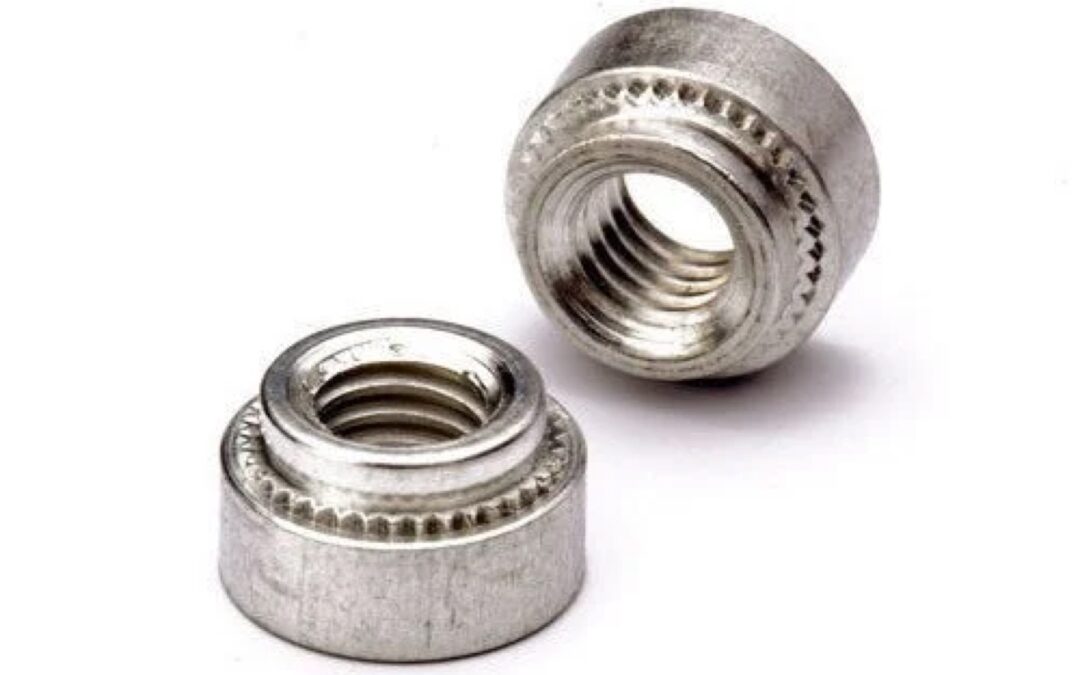
Clinch nuts and rivet nuts both create a reusable internal thread in sheet metal, but they are installed differently. Choosing between them usually depends on how the part is assembled, what installation equipment is available and whether the back side of the panel can be accessed.
Quick answer: clinch nut vs rivet nut
A Clinch Nut is pressed into a prepared hole in sheet metal. A Rivet Nut / Insert Nut is set with a rivet-nut tool and can create a threaded fixing where access is available from only one side of the panel.
When a clinch nut is the better fit
Clinch nuts suit production or fabrication work where the sheet can be positioned in a press and the correct prepared hole and panel thickness are controlled. They create a captive thread without welding and are useful for enclosures, equipment panels and fabricated sheet-metal assemblies.
When a rivet nut is the better fit
Rivet nuts are useful when a threaded insert must be installed from one side, including finished or enclosed sections where rear access is limited. The insert is placed through the hole and set with the appropriate tool.
What should you compare before choosing?
Check the required thread size, sheet material, panel thickness, prepared hole size, available installation equipment, access to the workpiece, material or finish and quantity. These factors are more useful than choosing only by the thread size.
Are clinch nuts and rivet nuts interchangeable?
Not automatically. They create a similar end result—a threaded fixing in relatively thin material—but the installation method and panel requirements are different. The correct insert should be selected for the actual assembly process and sheet specification.
Related rivet and insert options
Browse the Rivets & Inserts range. If the requirement is specifically for rivet nuts, the existing Rivet Nut selection guide covers additional selection points.
For a quotation, send the thread size, panel thickness, material, finish and quantity.